

Product images play an important role in a customer’s decision about whether or not to buy a product from you. For this reason, ecommerce store owners should invest heavily in creating product images that are sure to help answer customers’ questions about a product and motivate them to buy.
Here are five very desirable characteristics you want for the images you use on your ecommerce store.
1. High Quality
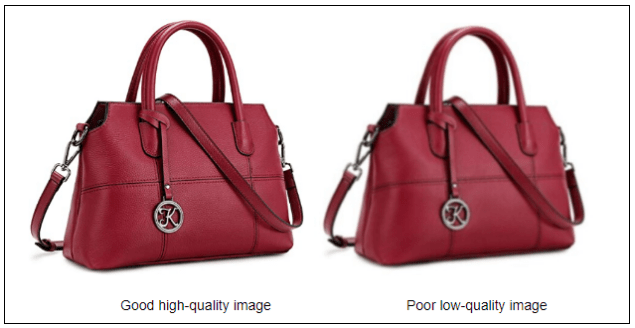
There’s an increasing demand for high-quality product images on ecommerce stores, and owners need to meet or exceed expectations. A good product image gives visitors to your store a better understanding of the product, so it’s important that images correctly show product characteristics at a high level of quality.
Ecommerce customers aren’t able to touch the product and can only learn more about the product by looking at the images you provide, so make sure they’re high-resolution. Blurry images reduce the trust level of potential customers and therefore reduce the conversion rate of your store. Higher-resolution images do the opposite—building trust and increasing conversions.
Note: While creating high-quality images for your ecommerce store, optimize them in such a way that they don’t affect the loading speed of the store.
2. Multiple Angles
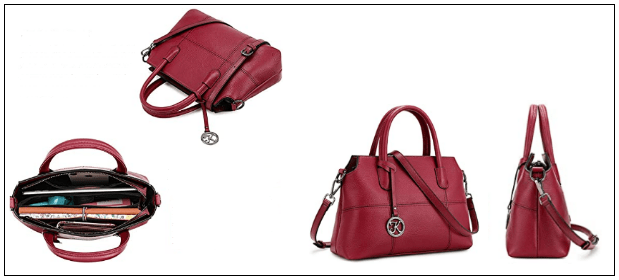
Providing images that show the product at different angles reduces doubt and increases the confidence of your customers, which then increases conversions.
Customers who visit your store’s product page are usually interested in seeing the product from multiple angles, so you must offer a variety of high-quality images that show the internal and external features of the product.
A good way to confirm you have all the picture angles you need is to ask yourself the same questions a customer would ask when looking at the product. These help you capture images that answer customers’ questions before they ask them.
In the example of the bag we’re considering, people will want to know more about these aspects of the product:
- The exterior: What do the front, back, sides, top, and (ideally) the bottom of this product look like?
- The interior: What compartments and closure systems does this product have? What materials are used?
3. Special Features
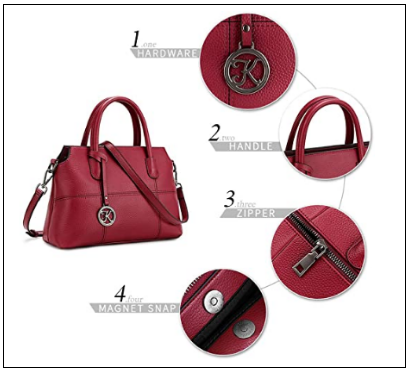
Showcase the unique features of every product. Your product images should portray these special features. For the example we’re looking at, these include:
- Handles/shoulder straps: Length, adjustability, etc.
- Pockets: External/internal, closures (zippers), etc.
- Locking mechanism: Type, material/color, etc.
- Material: Patterns, textures, leather vs. vegan leather, etc.
These details are very important to customers who are considering the purchase of your products. They also make it much easier to compare a product with other products in your store and with those in your competitors’ stores. Features often play a big role in the decision to buy one product and not another.
4. Product Size
Understanding the size of the product is crucial for customers. Buying products online requires a lot of trust, and most users are skeptical. To remove doubt and increase the confidence of your users, you need to use good photo techniques to capture the size of the product.
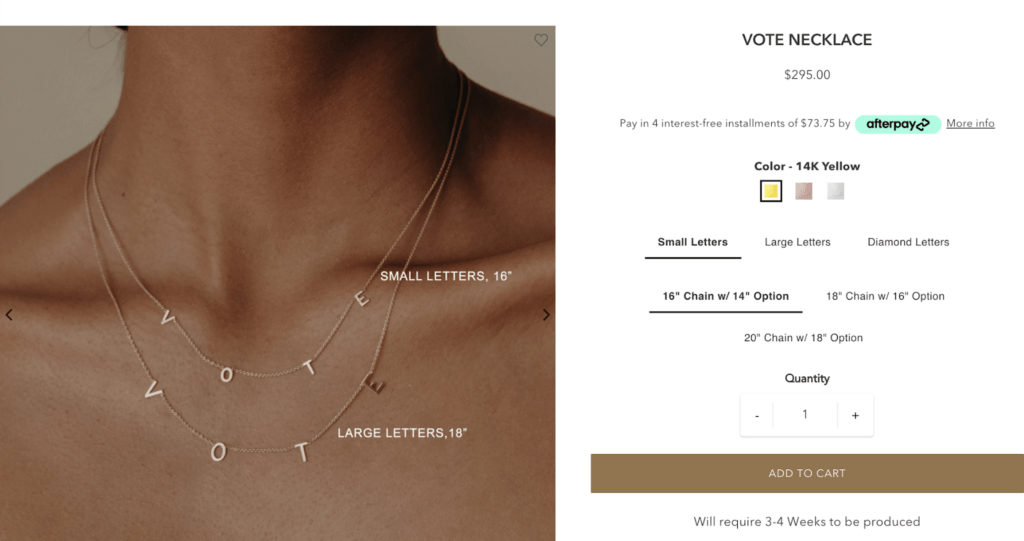
To show this in a product image, use props that users can identify to convey a visual representation of product size. For example, an ecommerce owner selling a handbag might use a model to indicate the size of a bag.
Using a model can be even more helpful where immediate comparisons are needed, as with displaying options for necklace length or element size, as shown here:
Note: If you do use props, make sure that you don’t put too much emphasis on them. That can end up distracting potential customers, which reduces attention on the product.
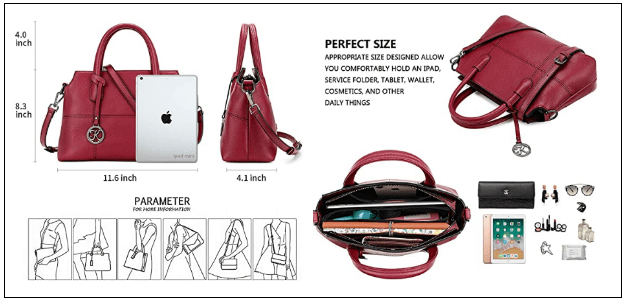
It’s also important to include dimensions in product images. In this example, the dimension measurements highlight the width and height of this handbag.
5. Lifestyle Images
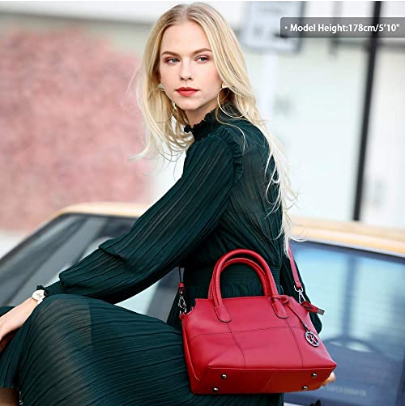
These images show users in different scenarios, broadening customers’ perspective on usage while highlighting product functionality.
It’s important that product images displayed on ecommerce stores show the demographics of users who may use the product. This answers questions users may have regarding usage and increases conversion rates. Here are some ways that images create motivation and also give the user ideas about how to use a product:
- A store selling headphones might show a user in a public space like a coffee shop wearing the headphones while listening to music or participating in a Zoom conversation. This can indicate to the viewer that the headphones are of a good enough quality to be noise-cancelling because they allow the user to focus on an online conversation.
- A store selling magnifying LED-lighted mirrors may show a woman applying makeup and also show a man using the mirror while shaving. This suggests a broad audience for the product while also demonstrating how the LED lights improve clarity for these users.
Conclusion
High-quality product images have a big role to play in building trust with customers who shop in your store, and building trust contributes greatly to your store’s conversion rate. If customers don’t have any questions about product features, functionality, size, and texture because they were able to glean all of this information from the product images you’ve provided, they’ll be more likely to move on to buy from you. Note: Creating high-quality images means you need a system for generating your product images to ensure that all of your images are high-quality, optimized, and provide all of the relevant information that users need.