
Ecommerce Product Photography on a Budget

An ecommerce product image is more than just the photo itself. It’s an emotional way for you to convey to customers what the product is about and how it can benefit them. It’s also a way to showcase your brand and what it stands for—and that’s why you need to

Matthew Stafford

Founder, BGS

12 min read

Table of Contents

An ecommerce product image is more than just the photo itself. It’s an emotional way for you to convey to customers what the product is about and how it can benefit them. It’s also a way to showcase your brand and what it stands for—and that’s why you need to know what you want the images to say and represent. But, is it possible to get quality photos with cheap product photography?

Taking good product images can be costly if you choose to hire a professional photographer, and this can be a limitation for some store owners who don’t have the budget. However, this shouldn’t be a problem because there’s a way to take good, professional photos for your product images yourself on a budget.

using a simple phone or an inexpensive camera to capture cheap product photography for your ecommerce store products.

How to Take Ecom Product Images Yourself – 

  • The cheap product photography Guide

To take high-quality ecommerce product images yourself, equip yourself with tools that can help you take professional images.

1. Smartphone or digital camera

These days, a smartphone can take very good pictures because their cameras are more and more advanced. You do still need a good smartphone with a 12-megapixel camera (and more) to take high-quality product images for your ecommerce store. 

You can also use a good but inexpensive digital camera. Use a DSLR or mirrorless camera to take pictures from different angles so customers can get an idea of what the product looks like from different views. With these two options, you are capable of embracing cheap product photography but still obtain high quality ecommerce product photos.
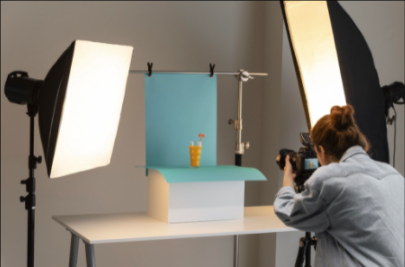
an ecom store owner demonstrating how to take pictures for ecommerce when you are on a budget.

2. Artificial or natural light

To capture amazing product images, you need good lighting. Whether natural or artificial, it must help you bring out the original color of the product and make the product features clearly visible.

To get the most out of natural light, take your photos in a brighter room, closer to a window. The larger the window, the brighter and more natural the light that flows into the room.

You can also buy an artificial light, which usually comes with an umbrella reflector. The reflector evenly reflects the light stream, which makes the product stand out. The entire photo studio light kit usually costs around $120.
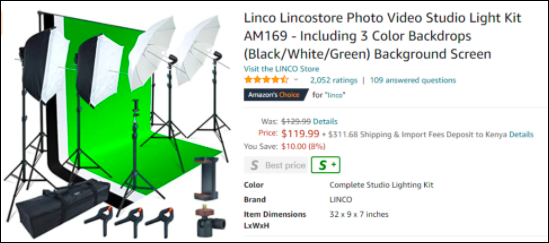
owning a studio light kit helps one to take cheap product photography.

Note: If you choose to use natural light, you are limited to taking product shots in daylight because you’re relying on the light from the sun, but artificial light can be used at any time.

3. Mini photo studio lightbox or cheap studio

A mini photo studio is one of the important tools that help with cheap product photography. It can be key to taking high-quality product photos, although it’s mainly used for small products such as watches, jewelry, headphones, and so on. Modern mini photo studios come with lighting, and this can really help because it’s adjustable, letting you capture the product color for your image that is most faithful to its actual color. 

This portable photo booth kit is easy to assemble and can be used to take pictures from multiple angles. The cost is typically $16 and above, giving you a variety of options to choose from depending on your budget.

An inexpensive light studio can be used for large products, like home or office furniture. They can also be used to take lifestyle photos where models are wearing your products. If you choose to purchase one like that shown above, the kit comes with a number of backdrops (which I’ll describe below).
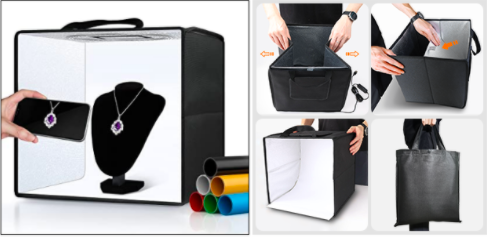
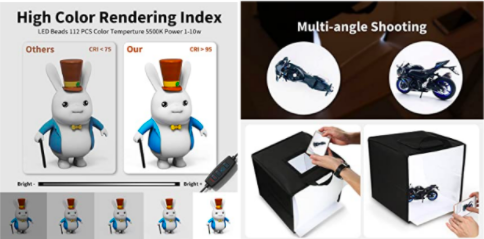
a mini photo studio is a must have when taking cheap product photography as it helps you capture professional photos.

High Color Rendering Index and Multi-Angle Shooting

4. Tripod stand

To capture cheap product photography, a tripod is a must-have. This is a good investment. Because a tripod stand is stable, it helps reduce image shake and the blurry images that result. There are different types of tripod stands available in the market, but I recommend buying a flexible one as it allows you to take product pictures from different angles and can be attached to many surfaces.
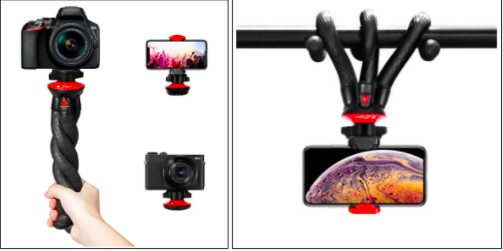
flexible tripod stand, a valuable tool for affordable product photography

5. Backdrops

A backdrop creates a continuous color background for the product. It helps eliminate distracting areas in the background, creating a seamless white, blue, black, green, or color-of-your-choice background. This makes photos look very professional and of great quality. Backdrops can be used in both a mini photo studio lightbox and a large light studio.
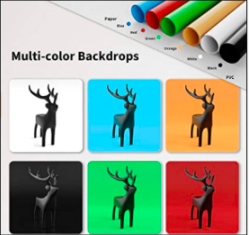
backdrop creating a seamless and professional background for product photography

6. Photo-editing tool

When you’re done taking product photos for your ecommerce store, you need to analyze if their original quality is satisfactory or if adjustments are necessary.

You can use tools like Adobe Photoshop, Adobe Illustrator, or other photo editing tools like GIMP (GNU image manipulation program) and BeFunky, which charge varying amounts for use of their tools. These photo editing tools help you adjust the lighting of the photo by increasing or decreasing vibrancy and saturation, crop out unwanted parts of the photo, or combine different photos that highlight different product features into one photo.

Adobe Photo shop and Artificial Intelligence

Final thoughts on cheap product photography

When you want to implement cheap product photography to take quality product photos, you don’t have to spend a lot of money on a professional photographer (who, according to Pixpa, typically charges very high hourly rates, ranging from $75 to $250 per hour). All you need to do is equip yourself with a variety of shooting and editing tools. These can help you take high-quality product photos that convey your message and product features to customers in an emotionally based way. 

Resources

Singh, G. (2021). Photography pricing guide: How much do photographers make in 2021? Pixpa blog.


Frequently Asked Questions

Shoot your products near a window or outside during daylight hours to take advantage of free, high-quality lighting and use a tripod as it helps eliminate camera shake, ensuring sharp and professional-looking images without the need for expensive equipment. Utilize free editing tools to enhance your product photos without spending money on expensive software.

To do simple product photography, opt for a plain, uncluttered background that won’t distract from the product, use a tripod that keeps the camera steady to ensure sharp and consistent images, and take shots from various angles to showcase different features and perspectives of the product, highlight important details or unique aspects of the product through close-up shots and use basic editing tools to adjust brightness, contrast, and color balance to make your product photos visually appealing.

The cost of product photography can vary significantly depending on several factors such as the complexity of the products, the level of expertise required, the number of images needed, and the location. On average, product photography can range from $25 to $150 per image for a basic setup. However, high-end commercial product photography can cost several hundred dollars or more per image.

Get Profit-Compounding Insights

Actionable ecommerce insights to help you scale smarter and increase profit—sent only when they’re truly worth sending.

No spam. Unsubscribe anytime.

Most Popular

Ready to Compound?

Discover your #1 growth constraint in 30 minutes

Frequently Asked Questions

How long does it take to build profit-compounding infrastructure?

For most brands, we install the foundational infrastructure in 6-12 months. However, you’ll see measurable improvements within the first 90 days as we address your primary constraint. The key is that infrastructure continues to compound—the longer it’s in place, the more powerful it becomes.

Agencies execute tactics. We build systems. Agencies optimize campaigns. We install infrastructure. When an agency leaves, performance often craters. When our infrastructure is in place, your growth becomes self-sustaining. We embed operators who become part of your team, not external vendors managing you from a distance.

Our ideal clients are typically doing $2M-$50M in annual revenue. Below $2M, you’re often better served focusing on product-market fit and basic execution. Above that threshold, infrastructure becomes the primary growth lever. That said, every business is different—take our free diagnostic to see if we’re a fit.

Perfect. We don’t replace your team—we make them dramatically more effective. Our infrastructure integrates with your existing operations, adding the systems, data, and frameworks that turn good operators into exceptional ones. Many of our best results come from brands who already had talented teams but lacked the infrastructure to compound their efforts.

Take our 30-minute diagnostic. It identifies your #1 constraint—whether that’s infrastructure, execution, or something else. If you can’t predict revenue within 30%, if growth feels like gambling, or if you’re constantly firefighting instead of building, infrastructure is likely your constraint.

Continue Learning

More profit-compounding insights to accelerate your growth

Listen to the episode: In this powerful episode on The Edward Show, host Edward Sturm speaks with Matt Stafford, Managing Partner at Build Grow Scale, as he shares quick, actionable, and proven conversion rate optimization (CRO) hacks drawn from his decade-long experience helping hundreds of online businesses significantly boost revenue. Matt emphasizes simple but powerful […]

Listen to the episode: In this episode of the eCommerce Marketing Podcast, host Arlen Robinson has an insightful conversation with Matthew Stafford, CEO and Managing Partner of Build Grow Scale. Matthew draws on decades of entrepreneurial expertise, sharing proven strategies to significantly increase eCommerce sales through powerful, psychology-driven optimization techniques. He reveals practical insights gained […]

Listen to the episode: In this episode of the Sales Pop podcast, host John Golden speaks with Matthew Stafford, Managing Partner at Build Grow Scale, as he shares proven strategies for growing and scaling eCommerce brands by enhancing customer experience and maximizing conversions. Matthew’s extensive entrepreneurial background – spanning traditional businesses, SaaS ventures, and eCommerce […]

Stop Treating Growth Like a Gamble

Install Your Profit-Compounding Engine

Take our 30-minute diagnostic call and discover the exact constraint blocking your compounding growth right now.

Free diagnostic call

30-minute clarity

No credit card