
Creating urgency is a tried-and-true method for improving conversion rates on your ecommerce store. If you can figure out what your customers want and/or need, and then craft compelling, “hurry up” language that plays to those wants and needs, you can turn visitors into buyers in real time.
Let’s assume you already understand your customers and know that they find the product or service you’re selling valuable, as this is a must.
Whatever your method for creating urgency, the goal is to make your customers feel these two things:
- Fearful of losing an important opportunity (i.e., “This is a limited-time offer that could be lost if you don’t purchase right now”).
- Positive/relieved when they complete the call to action (e.g., sign a contract, click the subscribe button, or receive a new item).
Incorporate those into any of the nine effective urgency-creating methods to follow, and you’ll be well on your way to increasing your store’s conversion rate!
1. Creating Urgency with Calls to Action
A call to action (CTA) is a phrase that prompts a user to take a specific action. CTAs can be used in email marketing, social media marketing, and on your store pages. To be most effective, they should be used in the appropriate places and contain urgent and active trigger words that persuade the user to accept an offer. Get it right and you’ll see a boost in your conversation rate (CVR) … but get it wrong, and it can cause friction and negatively affect your CVR.
Some of the best CTA phrases are:
- “Claim discount”
- “Buy now”
- “Add to Cart”
- “Claim this offer today”
- “Yes, I Want …”
- “You’re Running Out of Time!”

2. Creating Urgency with FOMO & User-Generated Content
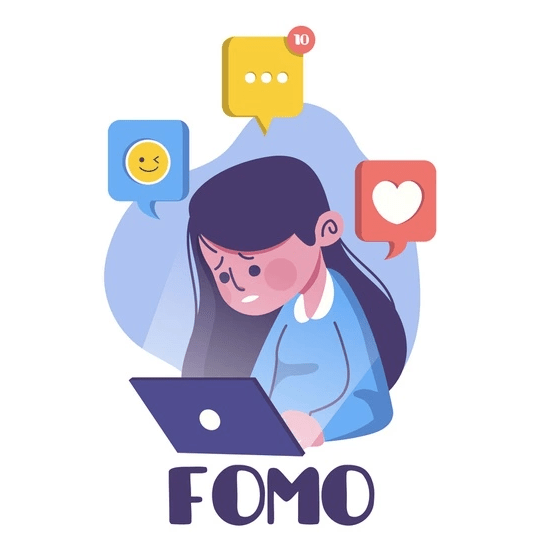
FOMO (“fear of missing out”) is a great way to trigger urgency because most people hate missing out on opportunities that cross their path—especially time-limited ones. Hearing about products that their family, friends, or colleagues are using with great success makes them want to get in on the action. In fact, according to a study conducted on millennials by Eventbrite, 69% of millennials would not like to miss out on offers that benefit their peers.
But, to get the most bang for your buck with the FOMO method, it is best combined with user generated content, or “UGC.” Incorporating a UGC component allows your visitors to see what products others are buying as well as variations of the same item, and creates an overall increase in awareness surrounding your offerings and brand.
3. Creating Urgency with Color Schemes
The color schemes ecom stores opt for are not random, but rather well thought out. They’re intended not only to “look good” but also to evoke emotion and action. For instance, red incites action and encourages users to buy. Blue is a calming color that elicits trust and increases sales indirectly. Orange stands out without being too harsh, increases excitement, and is positively perceived by both men and women.
Figuring out what type of urgency appeals to your brand’s audience will help you decide on the right color scheme for your store and play an important role in increasing your conversion rate in the long run.
4. Creating Urgency with Scarcity
While it’s true that conversion rates improve when there’s a sense of scarcity, this method should be used in moderation. Visitors will avoid stores if everything appears to be on the verge of selling out; false scarcity can be spotted from a mile away nowadays. Trust is the most important factor for customers, so you don’t want to damage that relationship. Lost trust = lost sales. In the case of legitimate scarcity, customers who trust your brand will be willing to wait for the next sale or for the item to be back in stock.
5. Creating Urgency with In-Stock Display
If you’ve ever shopped on Amazon, you’ve no doubt witnessed this method in action. It increases conversion rates by being a catalyst to purchase “now” (before it sells out) for people who were either unsure about purchasing or those who were going to purchase at a later date.
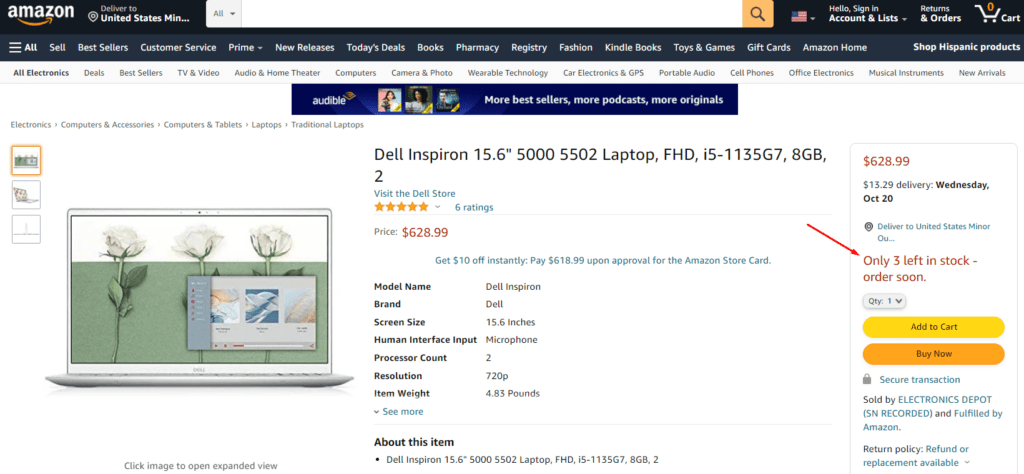
Amazon uses this tactic on its product pages to increase urgency.
6. Creating Urgency with Delivery Mode & Deadline Callout
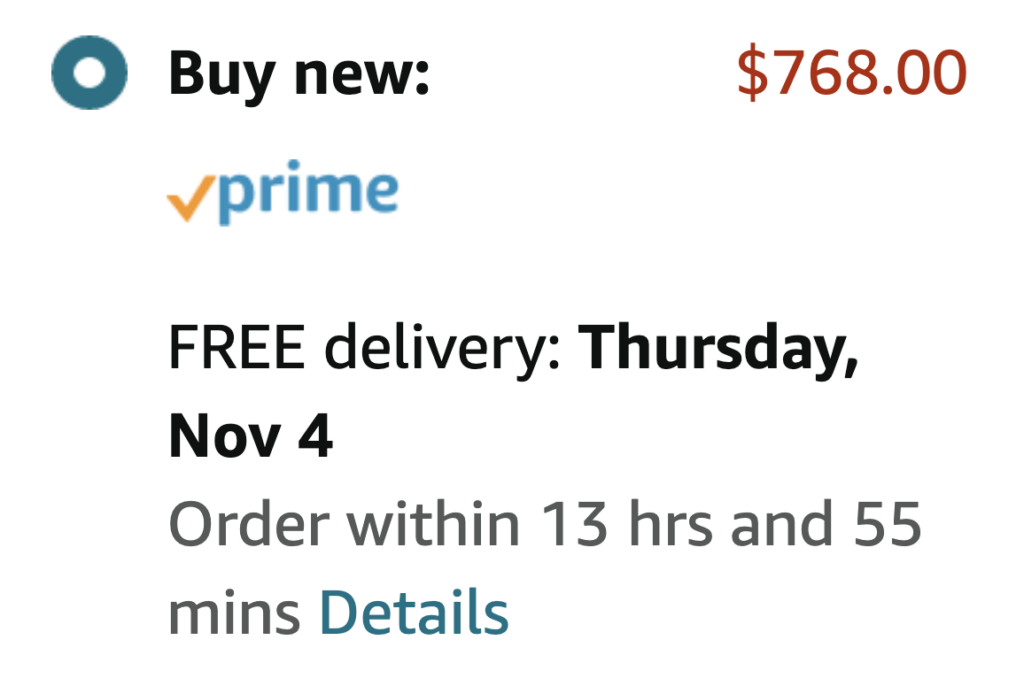
Drawing attention to delivery modes and deadlines is a marketing tool that triggers customers to click the “Buy Now” button. During peak seasons, like Christmas, and other deadline-driven occasions, like birthdays, showing customers the various delivery options available to them (i.e., “free shipping,” “same-day delivery,” etc.) can prompt them to make the purchase “now” to ensure it arrives on time.
7. Creating Urgency with Cart Abandonment Emails
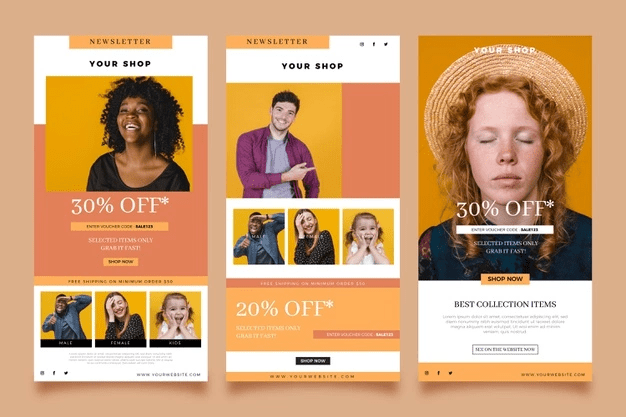
Like it or not, sometimes customers will leave your store without making a purchase. However, abandonment emails can be sent to remind them of the items they added to their cart. This is best done a few minutes after they leave your site, creating a sense of urgency to complete their purchase.
If they don’t take the bait after the first email, you can send a second email informing (or reminding) them of discounts that are expiring imminently to encourage them to buy now.
8. Creating Urgency with Timers
Introducing a countdown timer is another common method for increasing the sense of scarcity of a product. It allows you to show the buyer that when the timer runs out, the offer will cease to be valid and they will no longer be able to purchase the product at the stated discount.
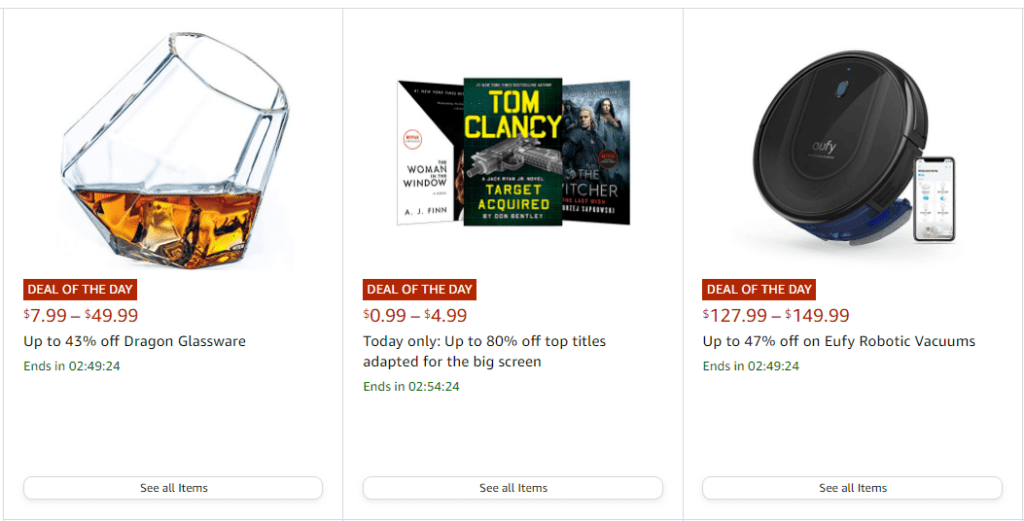
Amazon uses this strategy by indicating the time remaining on their “Deal of the Day” offers.
9. Creating Urgency within Urgency
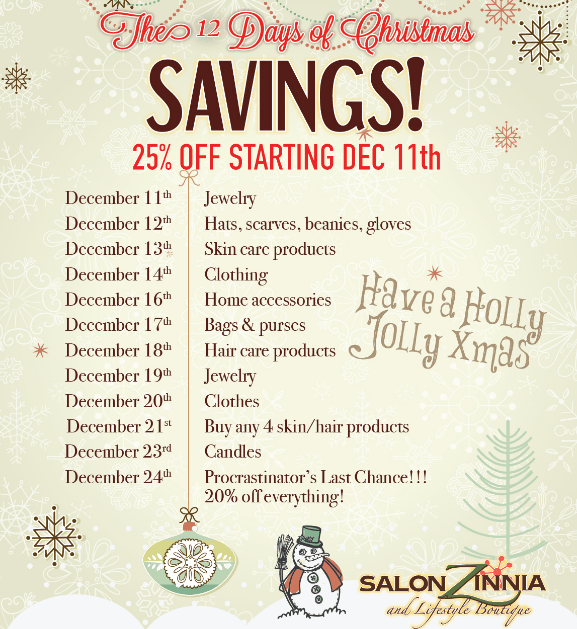
This approach is used to give people an offer for a longer period of time. The customer must return to the store each day to see what is being offered, and they will most likely end up purchasing not once, but several times during that period. A good example of this is the “12 Days of Christmas Savings” promo below from Salon Zinnia
Ecommerce store owners can use a mix of FOMO tactics and urgency through scarcity here to skyrocket their conversion rates.
Conclusion
An ecom store’s conversion rates will vary depending on the features of the store and the products or services sold, but creating urgency can be a valuable tool for gradually increasing conversion rates if you use one or more of the urgency strategies mentioned above. So, why wait? Implement urgency on your own store and get ready to bask in the winning results!
Resources
Eventbrite. (n.d.). Millennials: Fueling the Experience Economy. [online] Available at: <https://eventbrite-s3.s3.amazonaws.com/marketing/Millennials_Research/Gen_PR_Final.pdf> [Accessed November 2021].
The Daily Egg. 2020. 6 Colors That Are Proven to Boost Sales. [online] Available at: <https://www.crazyegg.com/blog/colors-proven-to-boost-sales/> [Accessed November 2021].