

When it comes to having a successful ecommerce business, Revenue Optimization™ is key. No question. And if you’ve been following Build Grow Scale (BGS) for very long, it’s safe to assume that you know at least the basics. But there’s another vital component that you absolutely cannot leave out of the equation if you want a profitable ecom store.
I’m talking about traffic.
You could have the most perfectly optimized ecom store on the planet, but if nobody’s actually visiting it, all the optimizations in the world won’t do you a bit of good. In this three-part article series, we’re going to dive into the most important types of traffic sources as well as how they directly affect your store’s sales and conversion rates. Are you ready?
First up on the docket … email marketing.
Email Marketing Defined
Email marketing is the act of sending a commercial message, typically to a group of people, using email. In its broadest sense, every email sent to a potential or current customer could be considered email marketing. But more specifically, it involves using email to send advertisements, request business, facilitate sales recovery, and solicit sales or donations. It has been around almost as long as the internet itself, and remains one of the most effective tools for reaching customers and generating sales. In fact, ecommerce businesses that use email marketing see an average order value that is 3x higher than those who don’t. And while some ecom business owners view email marketing as a necessary evil—something they have to do but don’t like doing—the truth is that with the right approach, it can be an enjoyable and highly effective part of your ecommerce strategy.
Why It’s a Huge Deal
Despite being one of the most underutilized traffic sources for ecommerce stores, email marketing has the potential to account for a significant portion (no less than 20 percent!) of your monthly revenue. In fact, our clients’ stores that use email marketing blasts convert over 30% on average. So, as you can see, email marketing is simply a no-brainer when it comes to running a successful business.
There are different types of emails that can contribute to sales, and one you can’t afford to be without is the abandoned cart email. This message is sent to customers who have added items to their cart but have not completed the purchase. Not having a strategic abandoned cart flow set up on your store is the equivalent of flushing dollar bills down the toilet!
Abandoned Cart Email
Abandonment is an ecommerce term used to describe the action of a web page visitor who leaves the page before completing a desired action. For example, shopping cart abandonment is when a person adds items to their online shopping cart but leaves before completing their purchase.
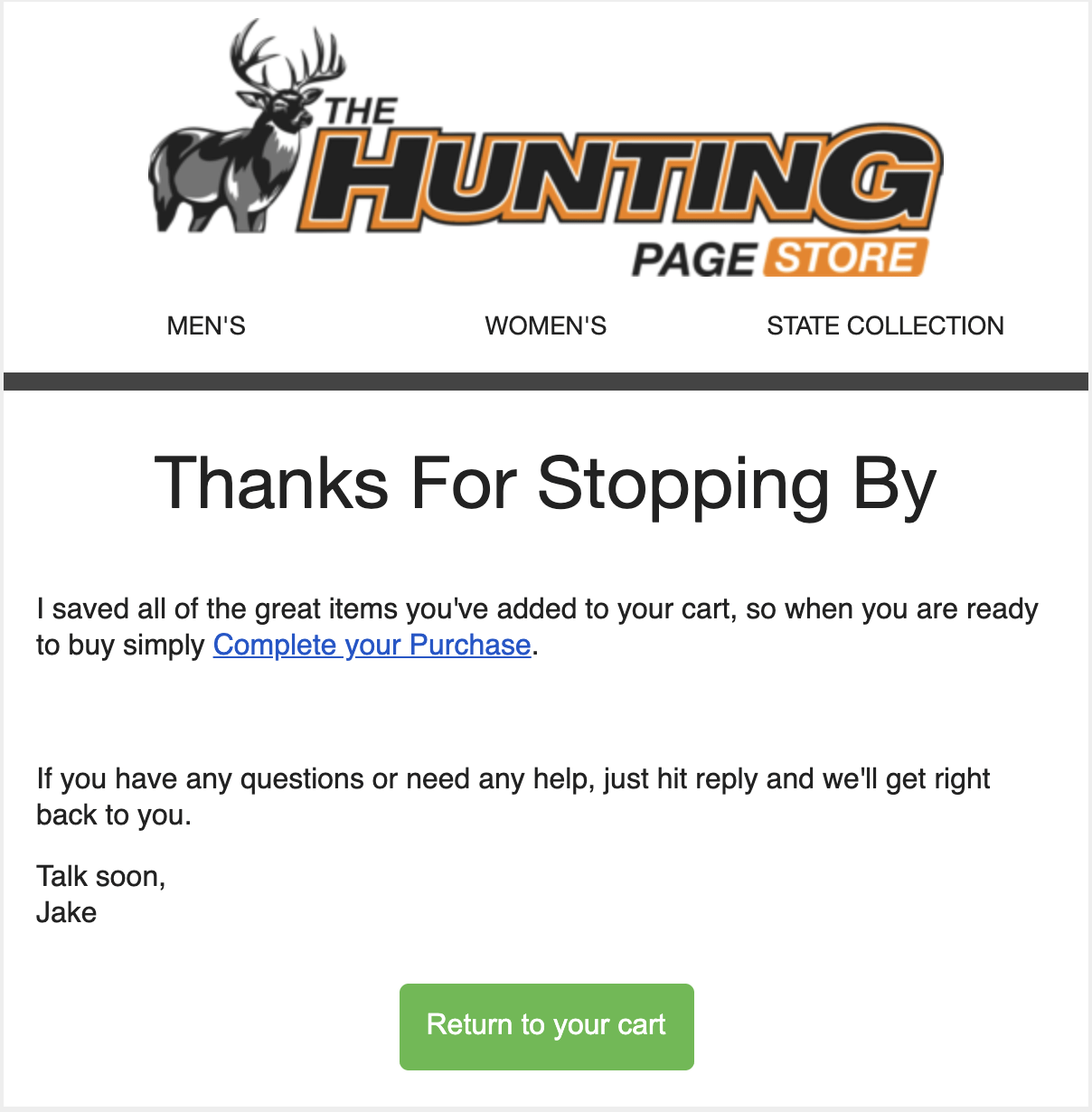
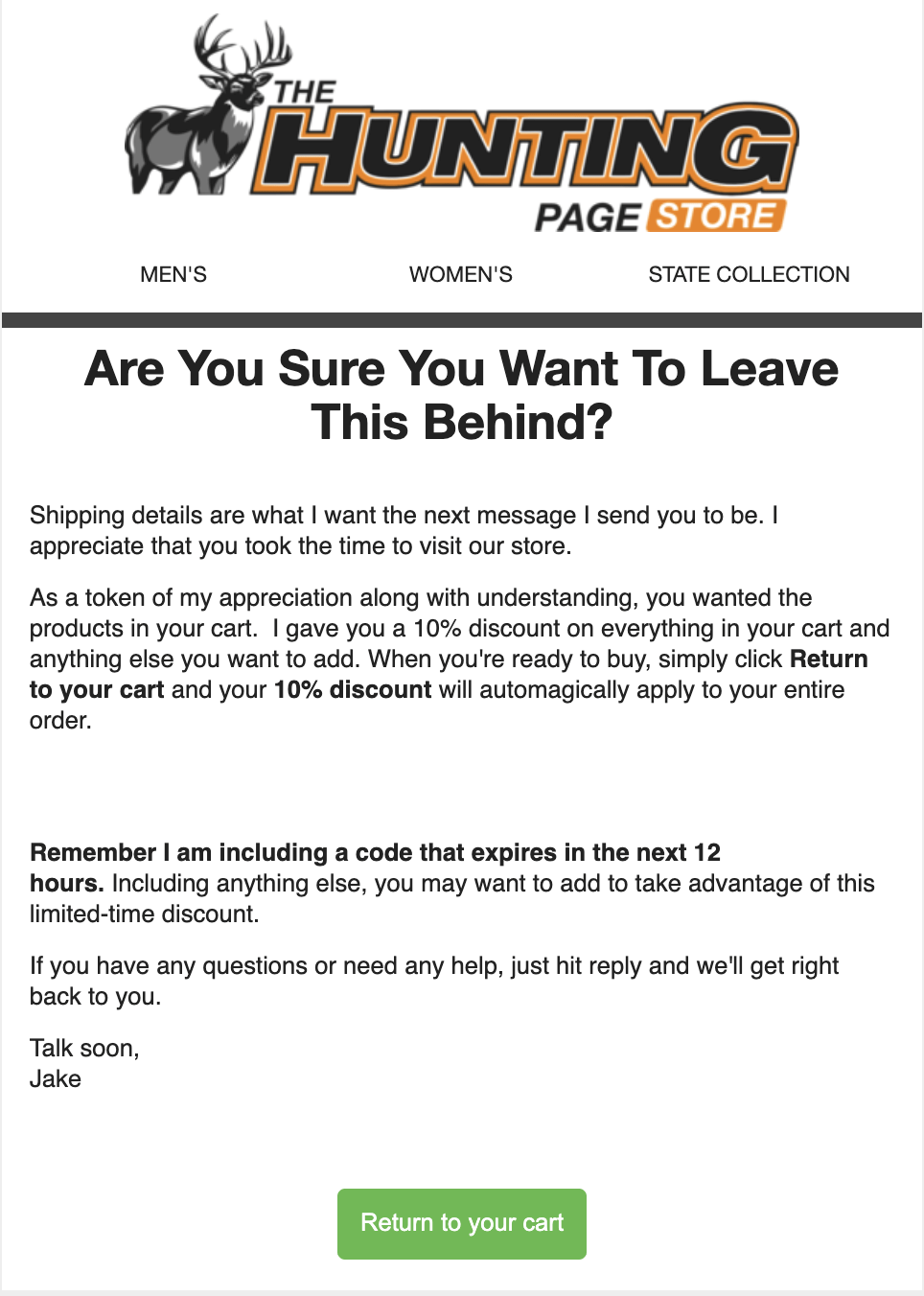
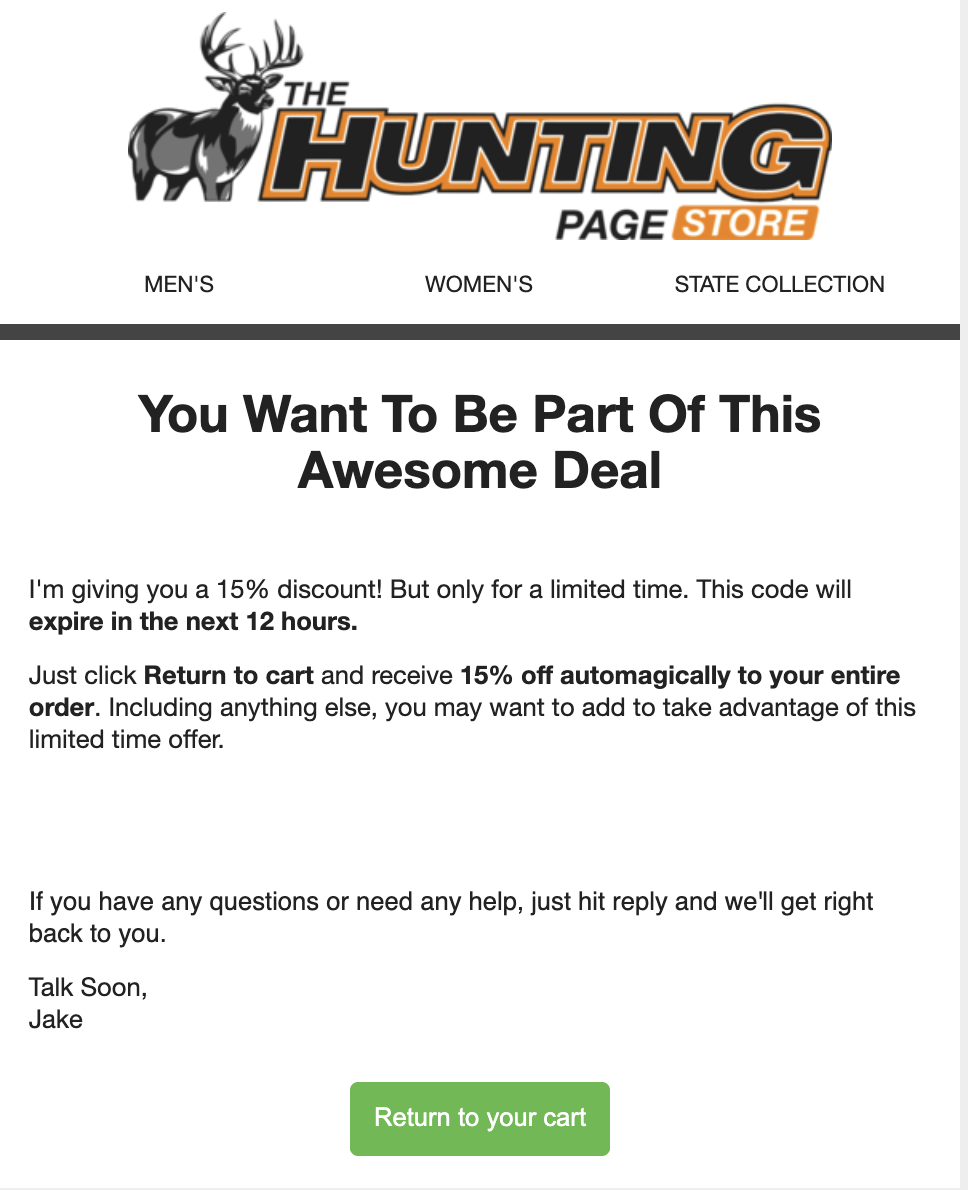
Let’s take a look at some examples of high-performing abandoned cart emails that BGS uses on a regular basis.
When to Send Your Abandoned Cart Emails
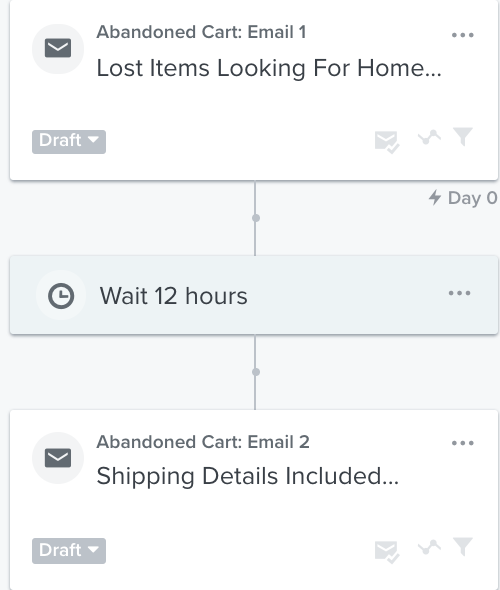
The screenshots above lay out a three-step abandoned cart email sequence. Now here’s our tried-and-true method (tested so many times we lost count!) as to the most effective time to send out each of the three aforementioned emails.
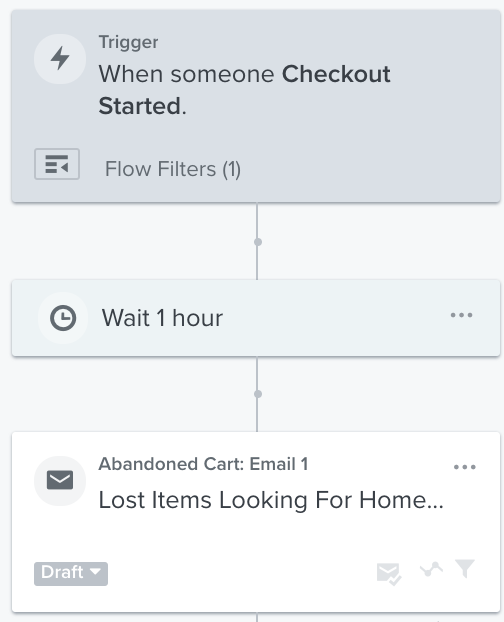
- Abandoned cart email #1: This email is sent out one hour after someone adds an item to their cart, proceeds to checkout, but does not purchase.
- Abandoned cart email #2: This email is sent out 12 hours after the initial email is sent—not 12 hours after abandonment has occurred.
- Abandoned cart email #3: The third and final abandoned cart email in this sequence is sent out 24 hours after the second email has been delivered. This larger gap is timed so that the shopper doesn’t feel bombarded with endless emails that will cause them to unsubscribe. No bueno!
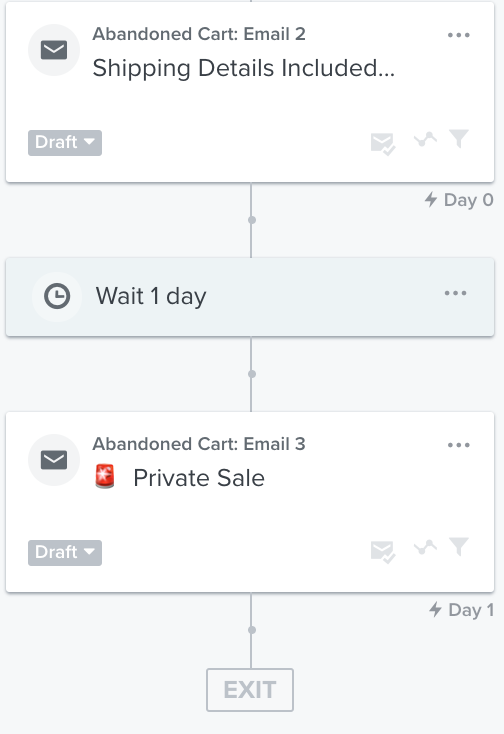
Those are the three emails, as well as the initial triggers and sequences deployed, that Build Grow Scale uses with all of its Amplified Partners. We strictly use Klaviyo for all of our Amp partner stores for email marketing and cart abandonment. Doing so allows us to keep up on copywriting market trends and in-app functionality, and also offers an easy way to split-test emails against each other.
Marketing Email
Marketing emails are a component of internet marketing and encompass online marketing via websites, blogs, social media, etc. You can think of them as being direct mail done electronically versus through a mail carrier service.
Each brand or niche will have a different approach to and sequence for how and when to hit users with marketing- or promotion-based emails. These communications should not only stay on brand for your business, but also include killer images and copy as well as super hooky subject lines that catch people’s attention.
The more you engage your audience, the more likely they’ll be to give up those credit card digits and complete their purchase with you!
Here are a few examples of top-notch marketing emails.
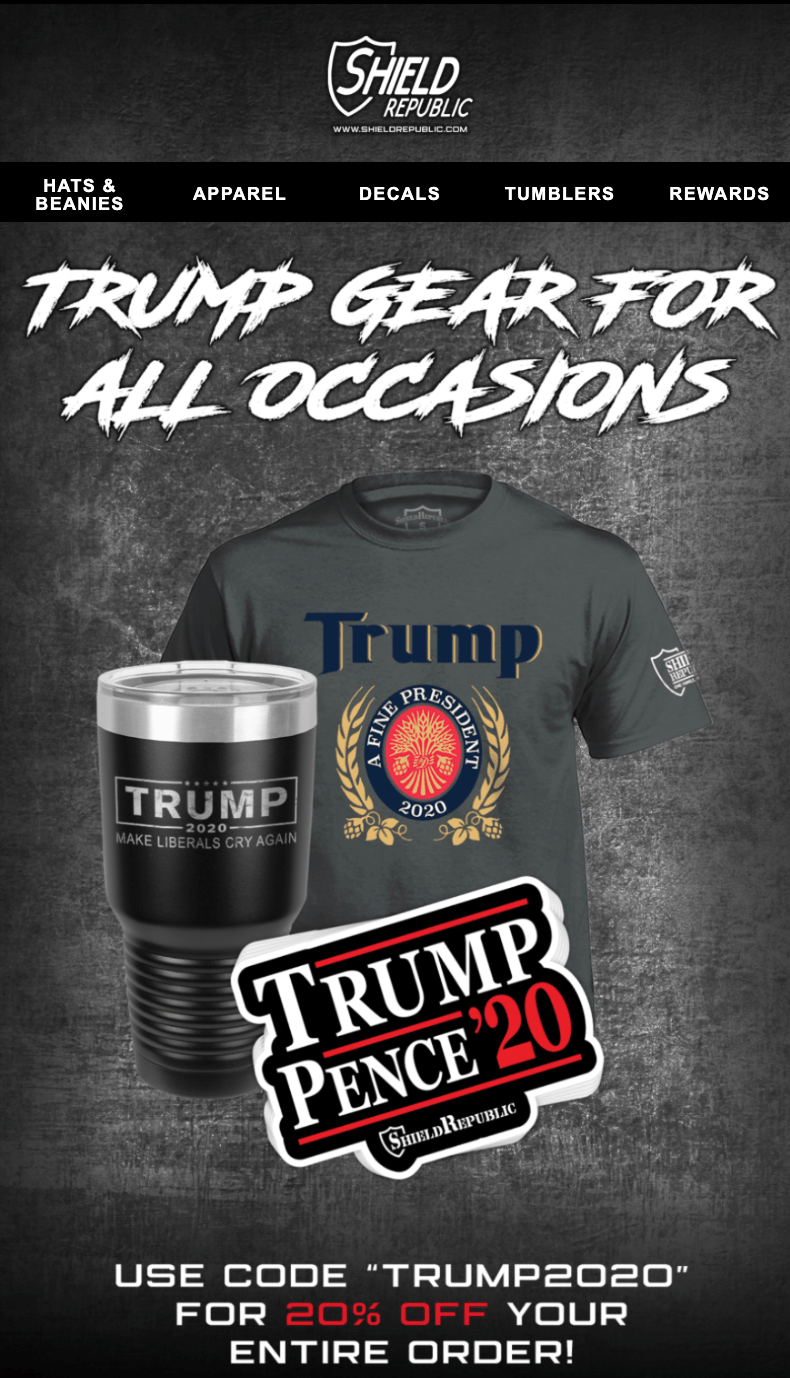
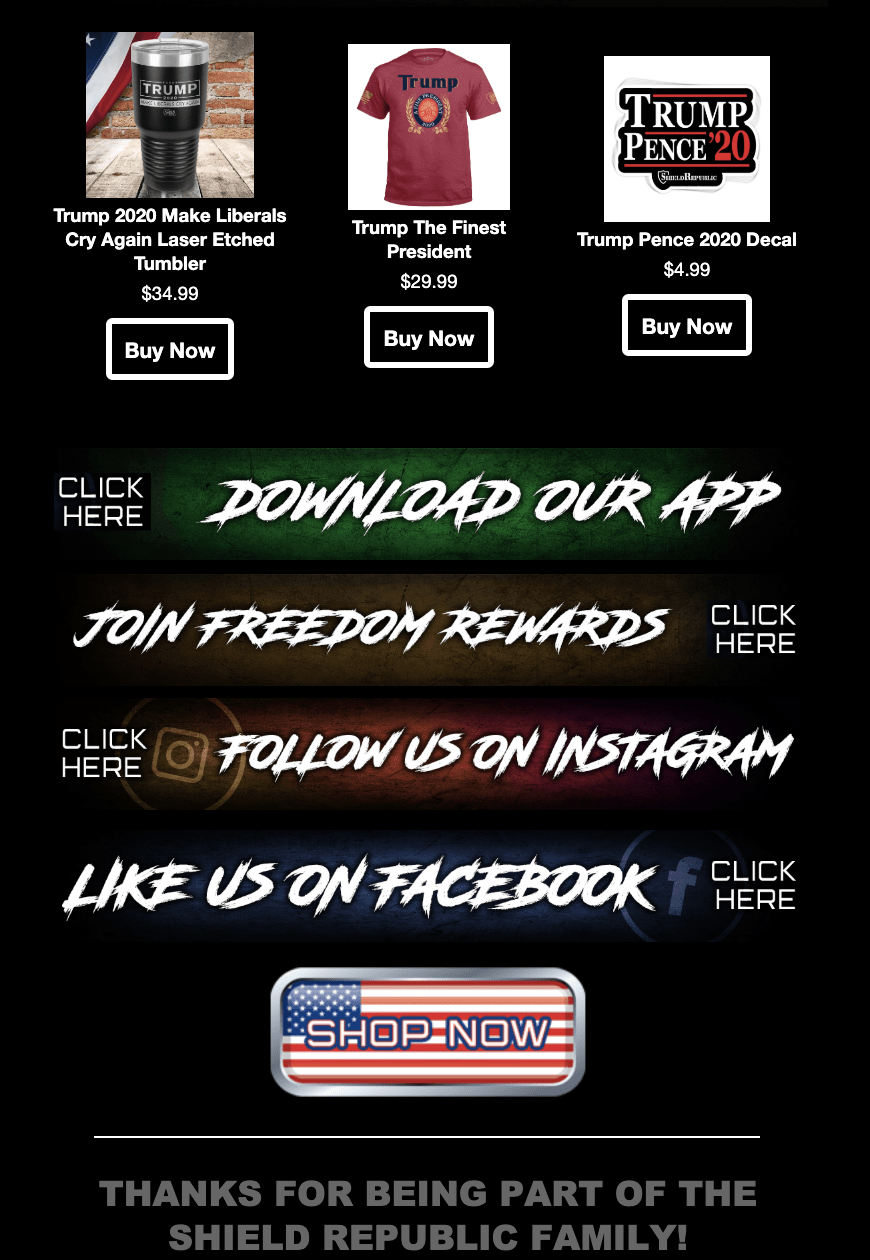
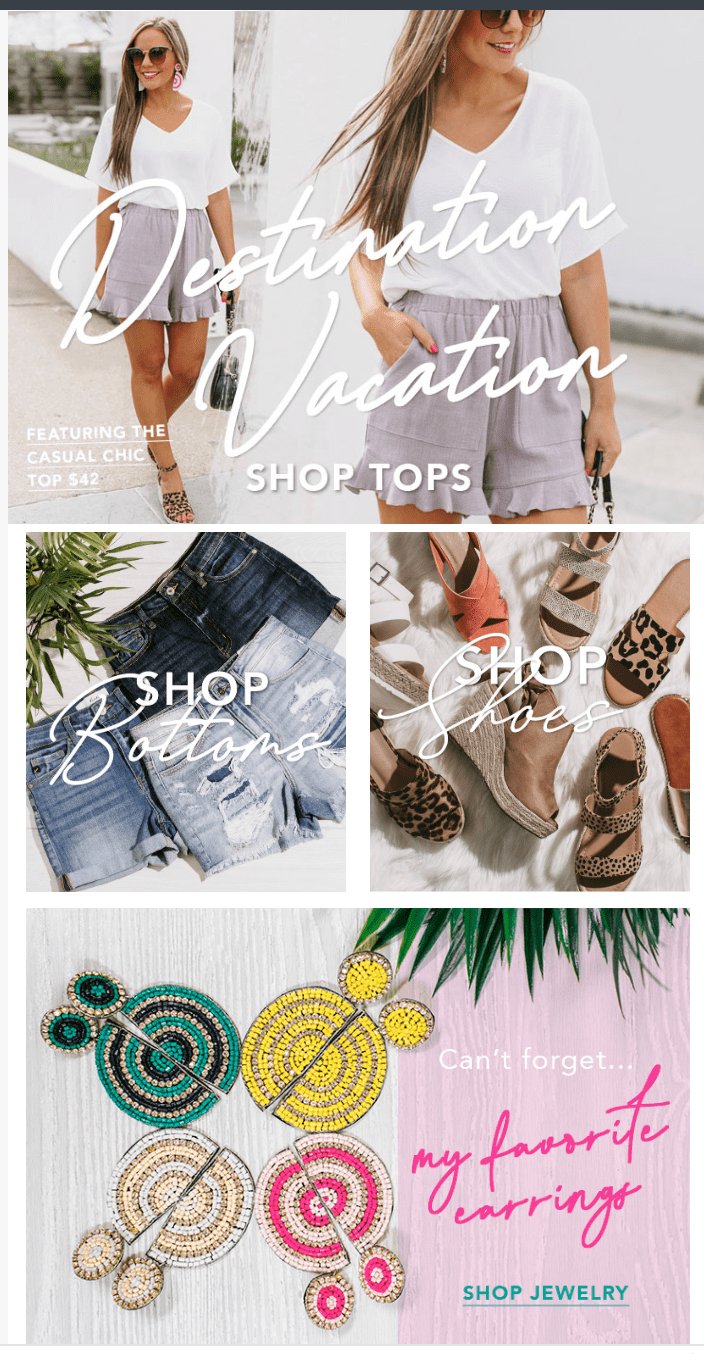
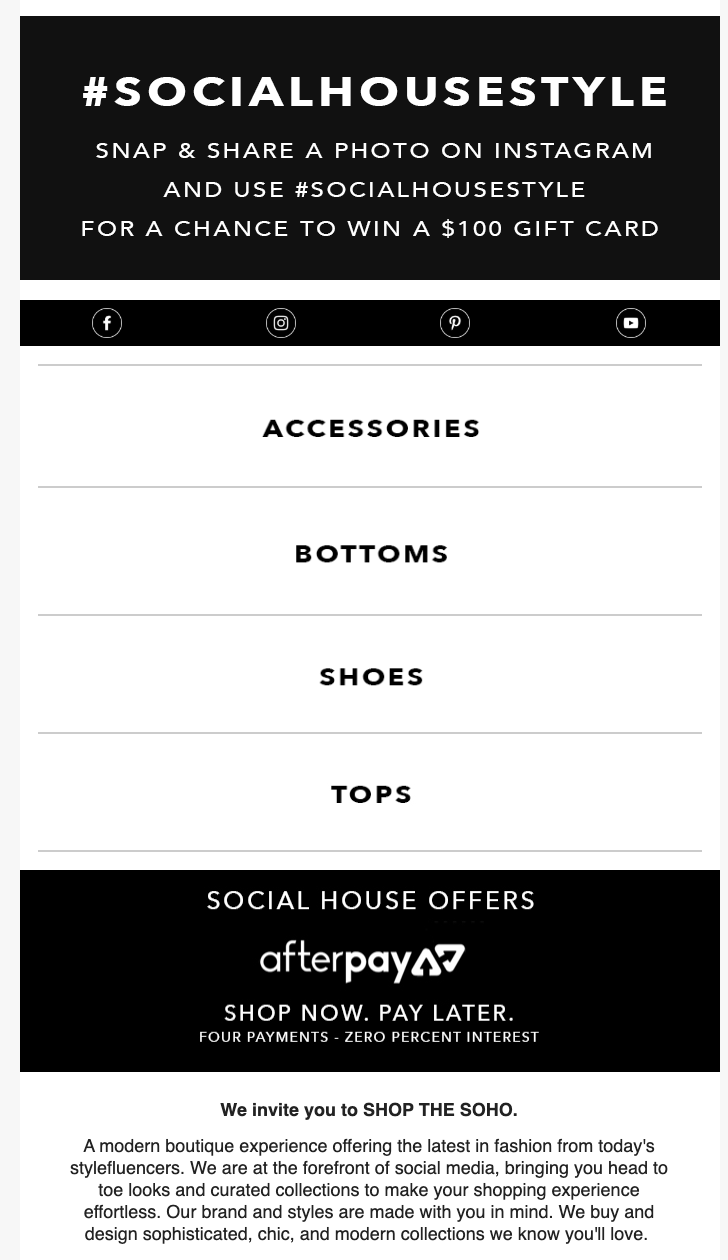
The email examples above are very niche- and brand-based marketing emails, and would not work for other stores if copied verbatim. That being said, notice the clean, sharp, and enticing qualities that can keep buyers engaged and connected. If an email uses some random snooze-fest of a font and is thrown together all willy-nilly, you can bet that the unsubscribe rate will be high.
This may seem counterintuitive, but the goal isn’t to make money on the “front end.” If you can break even acquiring a customer, you’ve won! In fact, 99% of your profit should come from the back end of your store–that is, from repeat customers, typically brought back to your website via emails. Without a detailed and structured abandoned cart email sequence set up, it will be very difficult to profit on the front end of your store alone.
Wrap-Up
Traffic is the lifeblood of any online business. Without it, your website might as well not exist. That’s why it’s so important to focus on finding ways to bring more visitors to your site. But if you rely on cold or generic traffic, it will show in your conversion rate. And not in a good way. That’s why I highly recommend that you implement what we talked about today regarding email marketing.
Stay tuned for Part 2 of this article series where we cover (drumroll) … Instagram marketing!